
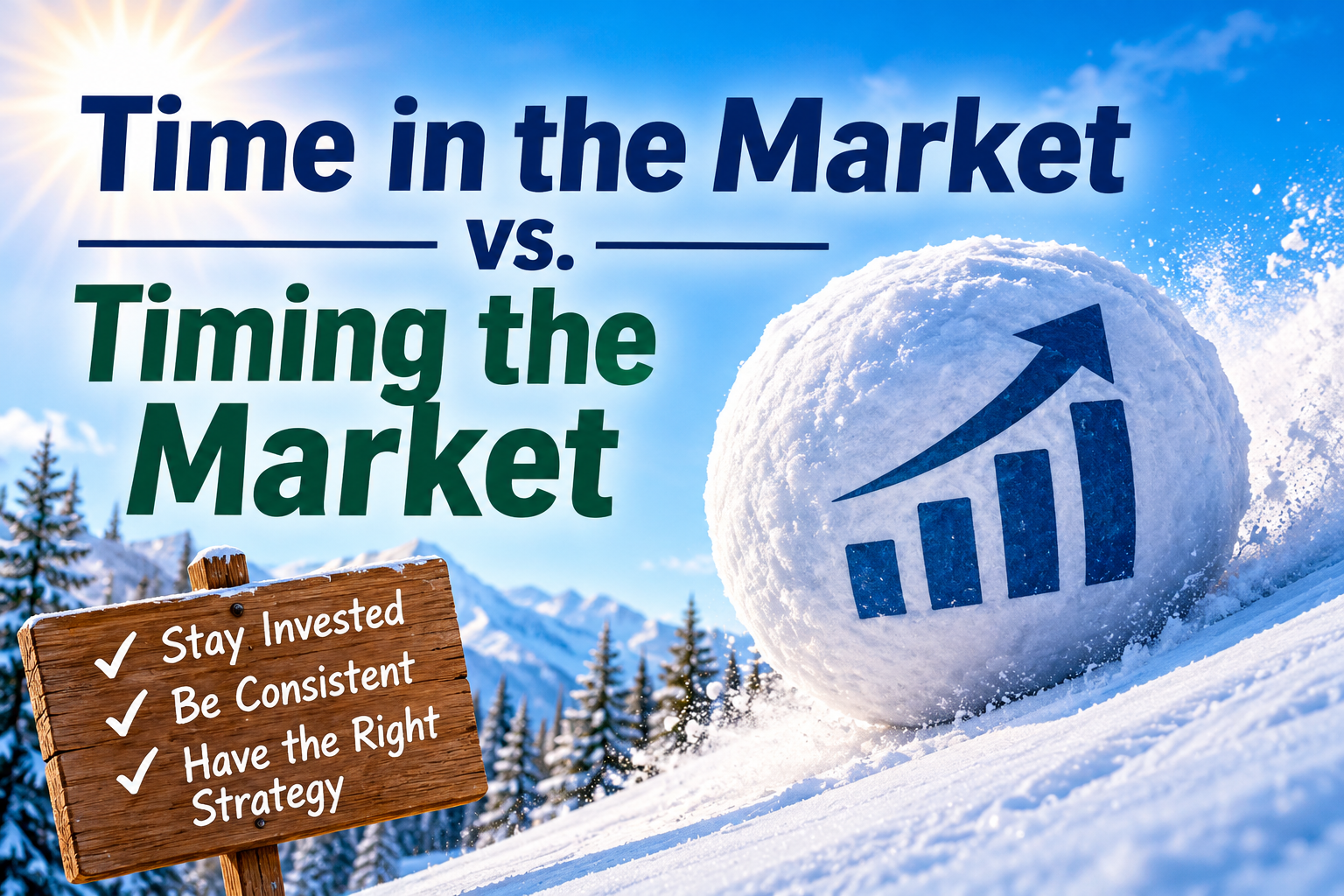
One of the biggest mistakes investors make is allowing emotions to drive their financial decisions. Emotional investing could negatively impact your long-term goals. Although it is tempting to make these decisions when short-term market movements happen, history has shown that patience and discipline are important parts of successful investing.
Time in the market means keeping your investments invested over a longer period of time rather than constantly buying and selling. The main reason why is compound growth. Imagine you have a snowball and you roll it down a hill. As it rolls down, it gets bigger and bigger. As it gets bigger, it picks up even more snow. The same works for your investments. Your earnings on your investments can generate even more earnings.
The question is: “How can I give my snowball (investments) the best opportunity to keep growing?”
I think the answer depends on where and how you start. Here are three things I would recommend to keep your snowball rolling:
1. Stay Invested Through Ups and Downs
As we know, the market fluctuates throughout time. It is nearly impossible to predict the market. However, throughout history long-term investing has been a great investment strategy. 7 of the market’s 10 best days occurred within 15 days over the past 20 years (1). If an investor avoided these days, they could have missed out on a much larger return as if they would have stayed invested. Having patience and remaining focused on your long-term investment goals can help prevent emotional decisions that may negatively impact your portfolio.
2. Start Early and Be Consistent
One of the best ways to build wealth over time is to make investing a consistent habit. Rather than waiting for the perfect opportunity to invest, consider making regular contributions to your investment accounts. Whether the market is performing well or experiencing a downturn, maintaining a consistent approach can help you stay focused on your long-term financial goals. You don’t even need to invest large amounts of money to get started. Small, consistent contributions can add up significantly over time, especially when combined with compound growth.
3. Develop the Right Investment Strategy
Creating a strategy that will help accomplish your investing goals is vital. It is important to stick to that strategy even through market downturns. The average return of the S&P 500 over the past 30 years is 10.4% (2). We have experienced three official recessions in the past 30 years, yet the market has averaged a 10.4% return. Based on this data, you will be thanking yourself in the future for investing long-term. Remember, past performance does not guarantee future results, and the right investment strategy will look different for everyone.
Building your snowball takes time, patience, and discipline. You may experience periods when your investments grow quickly and other periods when they lose value. The important thing is having a strategy, staying consistent, and giving your investments the opportunity to grow over time.
By Jimmy Hancock
Sources:
(1) https://privatebank.jpmorgan.com/nam/en/insights/wealth-planning/the-power-of-intent
(2) https://www.fidelity.com/learning-center/trading-investing/sp-500-average-return